
Professional Fatty Alcohol Polyoxyethylene Ether – Everything You Need to Know
2026-08-04
Fatty alcohol polyoxyethylene ethers are the unsung heroes behind many high-performance formulations, quietly boosting stability and efficiency in industries from textiles to personal care. But what sets a truly professional-grade product apart? As you dive into this comprehensive guide, you'll uncover the key properties, applications, and selection criteria that define excellence. We'll also highlight how HAISEN leverages advanced manufacturing to deliver superior consistency and tailored solutions, giving you the edge in your next project.
Getting to Know Fatty Alcohol Polyoxyethylene Ether: Core Concepts
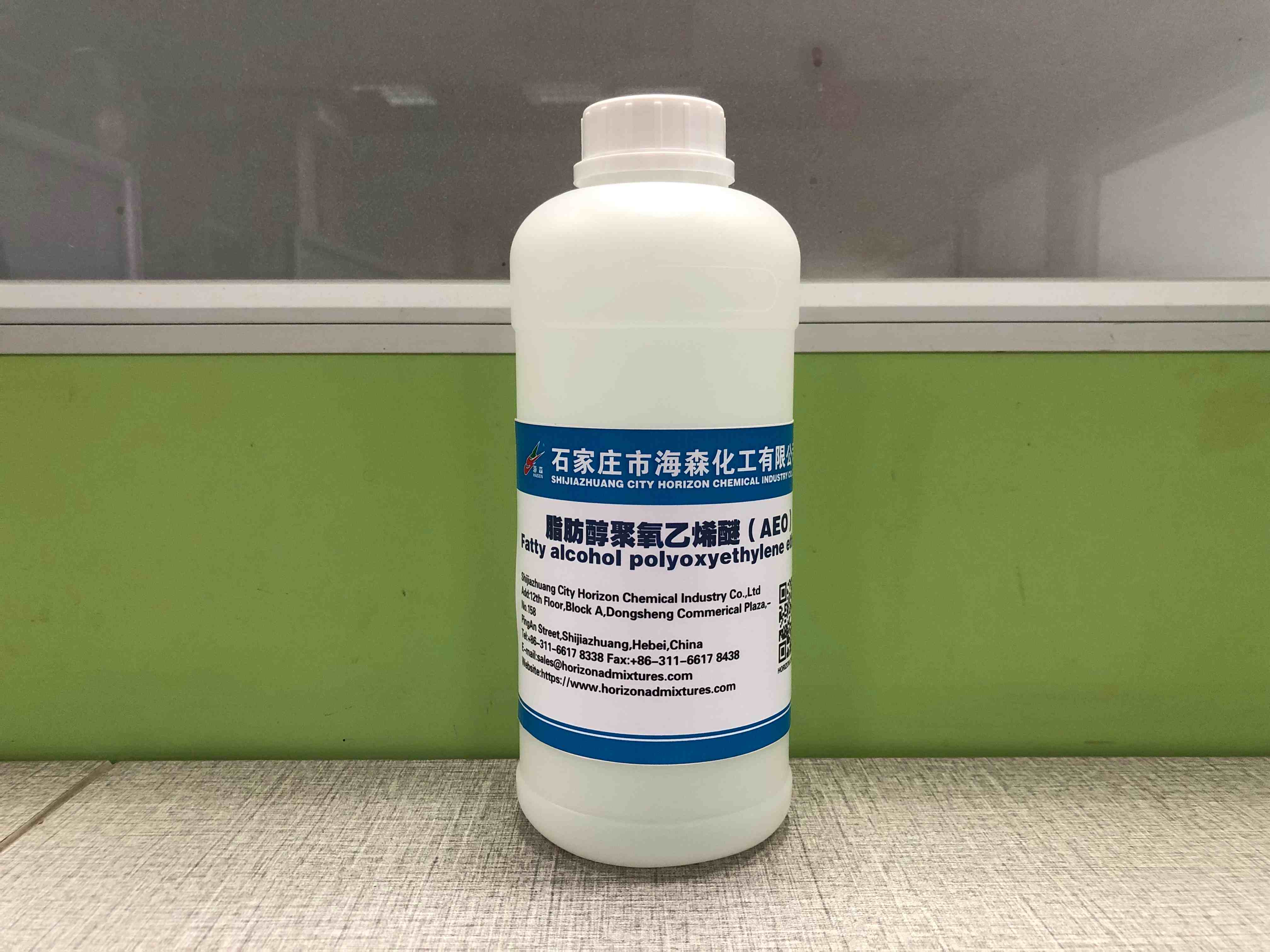
Fatty alcohol polyoxyethylene ether, often shortened to AEO, belongs to a family of nonionic surfactants built from fatty alcohols and ethylene oxide. Its structure features a hydrophobic tail derived from long-chain fatty alcohols—typically ranging from C12 to C18—attached to a hydrophilic head made of repeating ethoxy units. This dual nature gives it the ability to reduce surface tension, making it exceptionally useful in formulations where mildness and stability matter. Unlike many ionic surfactants, AEO molecules carry no charge, so they perform reliably across a wide pH spectrum and in hard water, without forming insoluble scums.
The behavior of AEO compounds shifts notably based on the degree of ethoxylation, or the number of ethylene oxide units added. With fewer ethoxy groups, the surfactant leans oil‑soluble and acts as an effective emulsifier for water‑in‑oil systems; increase that number, and water solubility rises, turning it into a detergent or wetting agent ideal for household cleaners and personal care items. This tunability is a core reason formulators reach for AEOs—they can dial in exactly the right balance of cleansing, foaming, and emulsifying power simply by adjusting the ethoxylation level. Moreover, the ethoxy groups introduce cloud points that let you predict phase behavior in aqueous solutions, a subtle but practical detail when designing temperature‑stable products.
What truly sets AEO apart from many surfactant classes is its low irritation profile and rapid biodegradability. Because the ether linkages break down quickly under environmental conditions, it aligns well with green chemistry principles, avoiding the bioaccumulation risks associated with some persistent surfactants. In industrial applications, you’ll spot it in textile processing, leather degreasing, and paint formulations—not just for its surface activity but also for its role as a humectant and antistatic agent. Getting familiar with these core concepts reveals why fatty alcohol polyoxyethylene ether quietly anchors countless everyday products, from mild shampoos to spray‑on agricultural adjuvants, without drawing attention to itself.
The Hidden Chemistry That Drives Its Performance
Every time you hit the accelerator or glide across a freshly waxed floor, you're witnessing a silent chemical performance. It's not just about slippery surfaces or brute force—the real magic happens at the molecular level, where chains of polymers tangle, slip, and realign to manage friction and heat. These materials are engineered with a delicate balance of additives and base compounds that can withstand immense pressure without breaking down. What seems like a simple physical action is actually a carefully orchestrated dance of electron clouds and bond rotation, adapting constantly to stress and temperature.
The secret often lies in the way certain molecules sacrifice themselves to protect the underlying surface. For instance, extreme-pressure additives react with metal surfaces to form a sacrificial layer that shears under high load, preventing direct contact that would otherwise cause welding or scoring. Meanwhile, viscosity modifiers—long, spaghetti-like polymers—expand and contract with temperature changes, ensuring consistent flow whether it's a cold start in winter or a scorching summer run. This thermal resilience is what separates a basic lubricant from a high-performance one, keeping engines alive in conditions that would destroy lesser formulations.
Even the smallest impurities or oxidation by-products can trigger a cascade of degradation, turning once-smooth performance into a gritty, inefficient grind. That's why modern chemistry focuses on antioxidants and detergents that actively trap rogue molecules before they can form sludge or varnish. It's an invisible maintenance routine happening every millisecond, a hidden chemistry that quietly extends the life of machinery while we focus on the road or the task at hand.
Real-World Uses You Encounter Every Day
Every morning, the alarm on your phone nudges you awake, and before your feet hit the floor, you’re already checking a weather app to decide on layers or an umbrella. Moments later, a navigation tool suggests the fastest route to work, dynamically rerouting you around a sudden traffic snarl. These seamless rituals depend on layers of real-time data processing and machine learning, yet they’ve become so ordinary that we rarely pause to appreciate the invisible engineering keeping them humming.
In the evening, you might stream a film that a recommendation system cherry-picked from a vast catalog, its accuracy eerily tuned to your offbeat tastes. A few clicks launch your online grocery order, with a payment gateway scrambling sensitive card details into indecipherable code while fraud detection tools scan for anomalies in the background. Even the device you’re using to read this is silently orchestrating a symphony of protocols to maintain a stable connection and conserve battery life—all without a second thought from you.
From Raw Materials to Refined Product: Inside Production
Every production floor hums with the energy of potential—unprocessed materials stacked in towering coils, barrels of base liquids, or rough-hewn blocks awaiting their metamorphosis. The first phase is never just about feeding machines; it's a calibrated dance of sensing, measuring, and adjusting. Technicians don't rely solely on digital readouts; their fingertips brush over surfaces, ears tuned for the subtle grind that signals impurities. This tactile knowledge, passed down through shifts, ensures the raw inputs meet a standard no datasheet can fully capture. It’s the human element that transforms industrial routine into a craft.
Then comes the core refining sequence, where the raw becomes recognizable. Heat, pressure, or chemical catalysts do their quiet work inside sealed chambers and serpentine pipework. But even here, the process resists full automation. Skilled operators interpret fluctuations in viscosity, color shifts, or the faintest scent changes that algorithms might overlook. They coax the material through each transition, not by rigid protocol, but by intuition forged over years. This stage is where science bends toward artistry, turning consistent chaos into deliberate design.
The final stretch moves beyond purity into performance. Testing goes past pass-fail binaries; samples undergo scrutiny that borders on obsession. Surface finishes are examined under angled light, stress-tests applied with deliberate cruelty, and collaborative reviews between shifts ensure that the product doesn’t just conform to specifications—it embodies the collective pride of those who made it. When the finished item finally rolls off the line, it carries an invisible imprint of every hand and mind that guided it from raw possibility to refined reality.
Practical Advice for Safe Handling and Storage
You'd be surprised how often a supposedly airtight container fails simply because the seal wasn't wiped clean before closing. Moisture or residue along the rim can break the barrier, letting air and contaminants sneak in. Before storing anything, inspect lids for cracks and ensure closures click firmly into place—your future self will thank you when nothing spills or spoils prematurely.
Labeling is one of those tasks that feels tedious but pays off more than you'd expect. Instead of writing cryptic shorthand that you'll forget within a week, note the date and a brief description in plain language. It's also wise to store reactive substances separately, not just from each other but away from high-traffic areas where accidental knocks happen. If you have curious kids or pets, a simple latch or elevated shelf can prevent a world of trouble.
Emerging Trends and What They Mean for the Future
The shift toward decentralized digital identities is quietly reshaping how we think about ownership and trust online. Instead of relying on a handful of platforms to verify who we are, individuals are gaining the ability to carry their own credentials across services without handing over unnecessary personal data. This isn’t just a technical upgrade—it’s a cultural move toward giving people more agency over their digital lives, and it promises to redraw the boundaries between convenience and privacy in the years ahead.
Another current that’s picking up speed is the blending of physical and digital experiences in everyday spaces. From fitting rooms that suggest items based on past purchases to grocery aisles that adapt pricing dynamically, the line between the store and the screen is blurring fast. What makes this trend especially interesting is how it’s being driven not by flashy novelty, but by a quiet demand for less friction. As these interactions become more seamless, they’re also raising fresh questions about what it means to shop, work, or simply move through a world that’s constantly reading and responding to our presence.
Perhaps most striking is the resurgence of craft and small-scale thinking in industries once dominated by mass production. Whether it’s clothing made in micro-factories or software built by tiny teams for niche audiences, people are gravitating toward things that feel intentional rather than optimized for scale. This isn’t nostalgia—it’s a pragmatic response to supply chain fragility and digital noise. If the trend holds, the future won’t belong solely to the biggest players, but to those who can pair deep expertise with genuine connection.
FAQ
It's a nonionic surfactant made by reacting fatty alcohols with ethylene oxide. The resulting compound has a hydrophilic polyoxyethylene chain attached to a hydrophobic fatty alcohol tail, giving it excellent emulsifying, wetting, and dispersing properties.
The key difference lies in the precise control of the ethoxylation degree and the use of high-purity fatty alcohols. This 'professional' grade often means narrower molecular weight distribution, lower unreacted alcohol content, and better batch consistency – crucial for demanding industrial applications.
You'll find it extensively in textile processing, leather degreasing, detergents, agrochemical emulsifiers, and personal care items. Its versatility allows it to serve as a wetting agent, emulsifier, dispersant, or even a solubilizer depending on the ethoxylation level.
It boasts superior electrolyte tolerance and works across a wide pH range, unlike many ionic surfactants. Plus, it's less sensitive to water hardness, making it a reliable workhorse in complex mixtures.
The hydrophilic-lipophilic balance (HLB) determines its affinity for oil vs. water. A low HLB (3-6) works for water-in-oil emulsions, high HLB (12-15) for oil-in-water. Selecting the right HLB is critical for stable emulsions.
Many grades have undergone safety assessments and are deemed safe in rinse-off and leave-on cosmetics. However, the purity and residual ethylene oxide levels must be strictly controlled. Always consult the supplier's specifications and regulatory guidelines.
Keep it sealed in a cool, dry place away from direct sunlight and strong oxidizers. It can absorb moisture and become viscous over time, so maintaining a consistent temperature above its pour point (usually 20-30°C depending on the grade) prevents handling issues.
Professional grades are typically characterized by tighter process controls, resulting in more predictable performance. They often have detailed analytical data, lower side-product content, and are tailored for precision applications where reproducibility is non-negotiable.
Conclusion
Fatty alcohol polyoxyethylene ethers are a class of nonionic surfactants that have become integral to countless industrial and household products. At their core, they are formed by reacting fatty alcohols—derived from natural oils or synthetic sources—with ethylene oxide, creating a molecule with a hydrophobic tail and a hydrophilic polyoxyethylene head. This structure is the key to their versatility: the length of both the alcohol chain and the number of ethylene oxide units can be tuned, resulting in a wide range of properties from excellent wetting and emulsifying to controlled foaming. The hidden chemistry behind their performance lies in this tunable architecture, which allows formulators to balance oil and water compatibility precisely. Whether stabilizing an emulsion in a cosmetic cream or enhancing the spread of an agricultural spray, their behavior is dictated by molecular design rather than chance.
Beyond the lab, these substances quietly shape our daily experiences—from the laundry detergent that lifts stains to the personal care products that rinse clean without residue. Their production is a sophisticated process starting with raw material purification, followed by precise ethoxylation under controlled temperature and pressure, often using catalysts to achieve narrow distribution of ethylene oxide chains. Once manufactured, safe handling and storage require attention to moisture, heat, and proper ventilation to maintain stability and reduce risks of degradation. Looking ahead, the industry is shifting toward bio-based alcohols and greener manufacturing methods, driven by sustainability goals and stricter regulations. Emerging trends also include designing molecules that offer multifunctionality or enhanced biodegradability, ensuring that fatty alcohol polyoxyethylene ethers remain indispensable in a future where performance must align with environmental responsibility.
Contact Us
Contact Person: Sam Lee
Email: [email protected]
Tel/WhatsApp: 86-311-6617 8338
Website: https://www.horizonadmixtures.com/